
Château de Compiègne
Compiègne, France
- Contract scope
- Exhibition design for “Prosper Mérimée (1803-1870)”
- Completion
- 2023 – Winning entry
- Area
- 1,250 m2
- Budget
- €150,000
- Client
- Private client
- Design team
- Lead architect: Chiara Alessio
Graphic design: Yan Stive
Lighting: Abraxas Concepts - Scope
- Exhibition design, lighting, signage
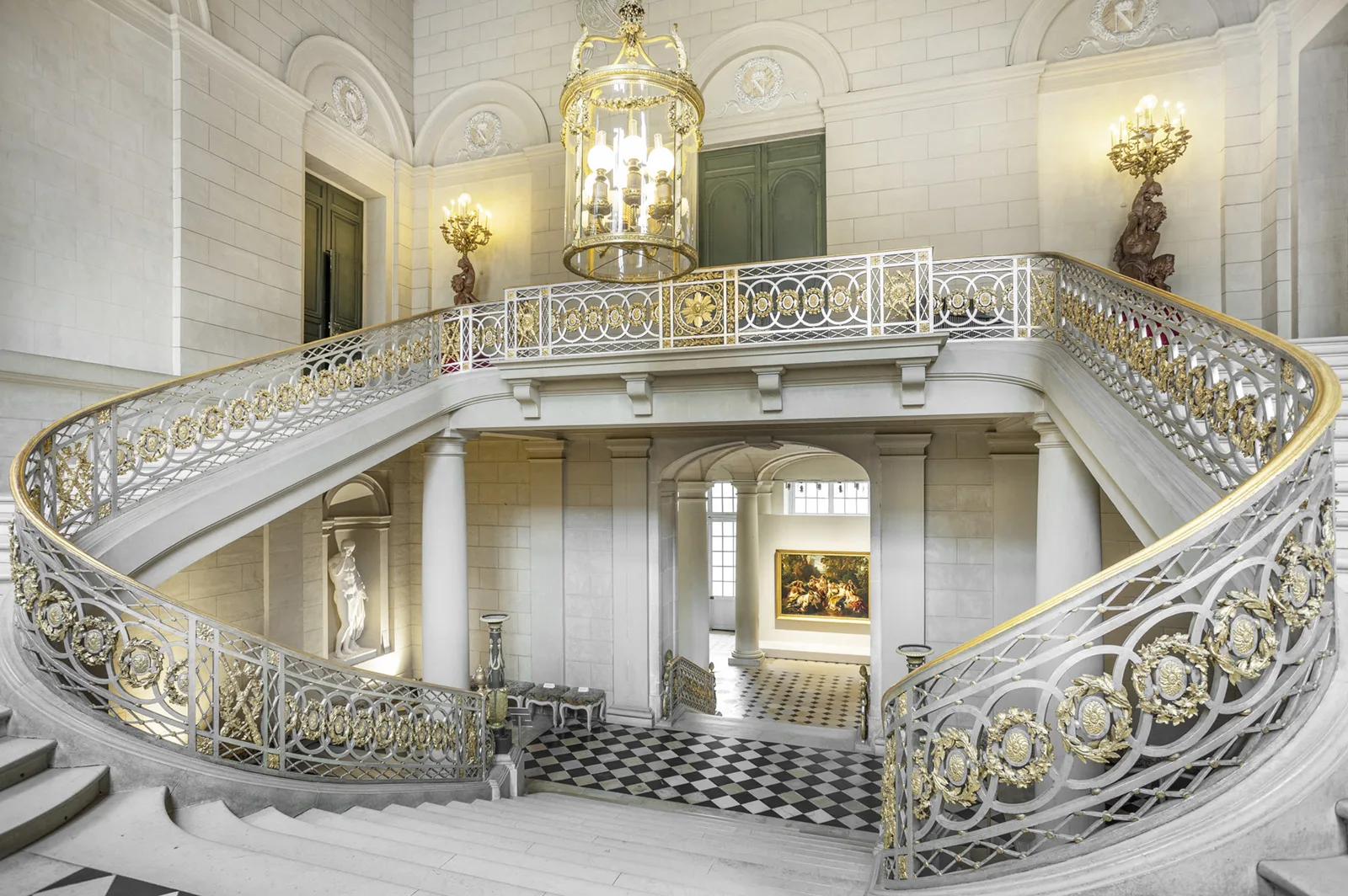
Built by Louis XV and Louis XVI, refurbished under Napoleon I and then Napoleon III, the Château de Compiègne was a centre of court life and of the exercise of power. The originality and beauty of the largest neoclassical château in France, and the quality of its interiors and furniture, make it a unique ensemble: a historic site which, alongside Versailles and Fontainebleau, is one of the three most important royal and imperial residences in France.
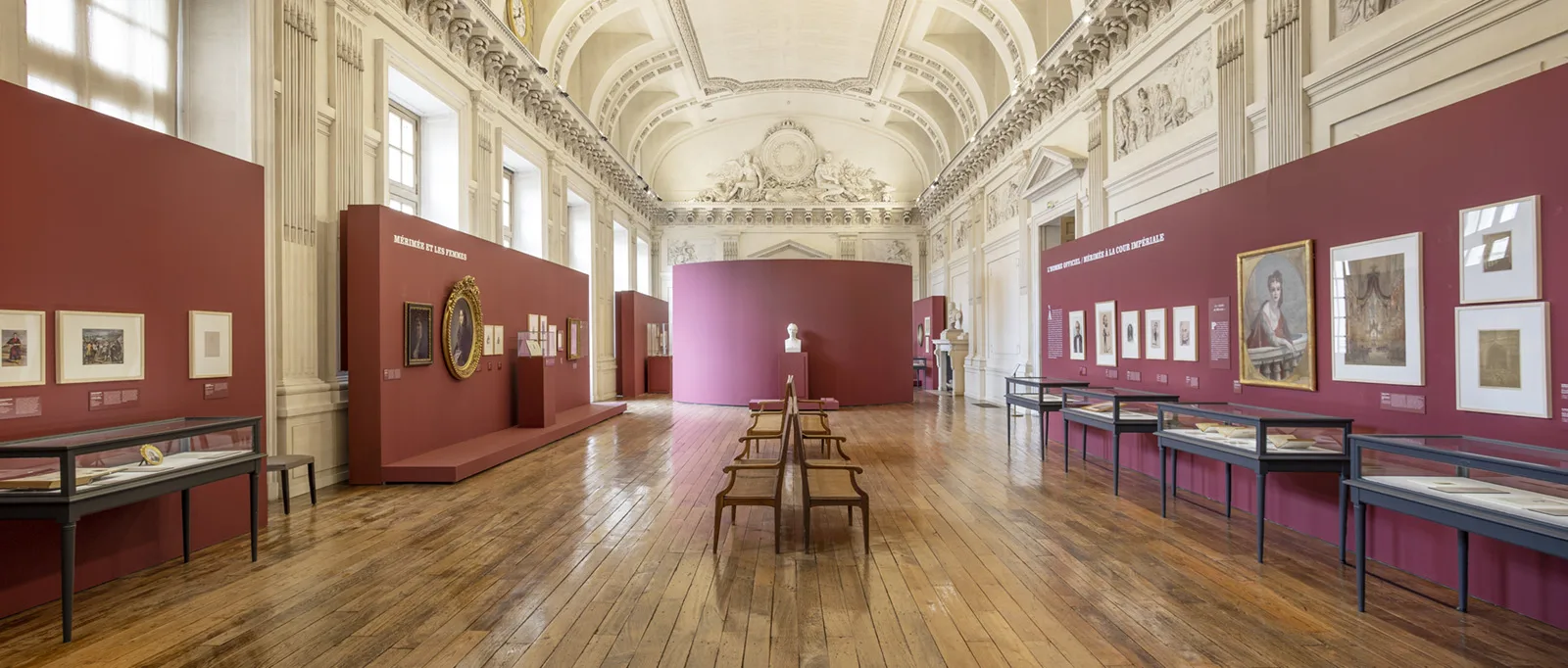
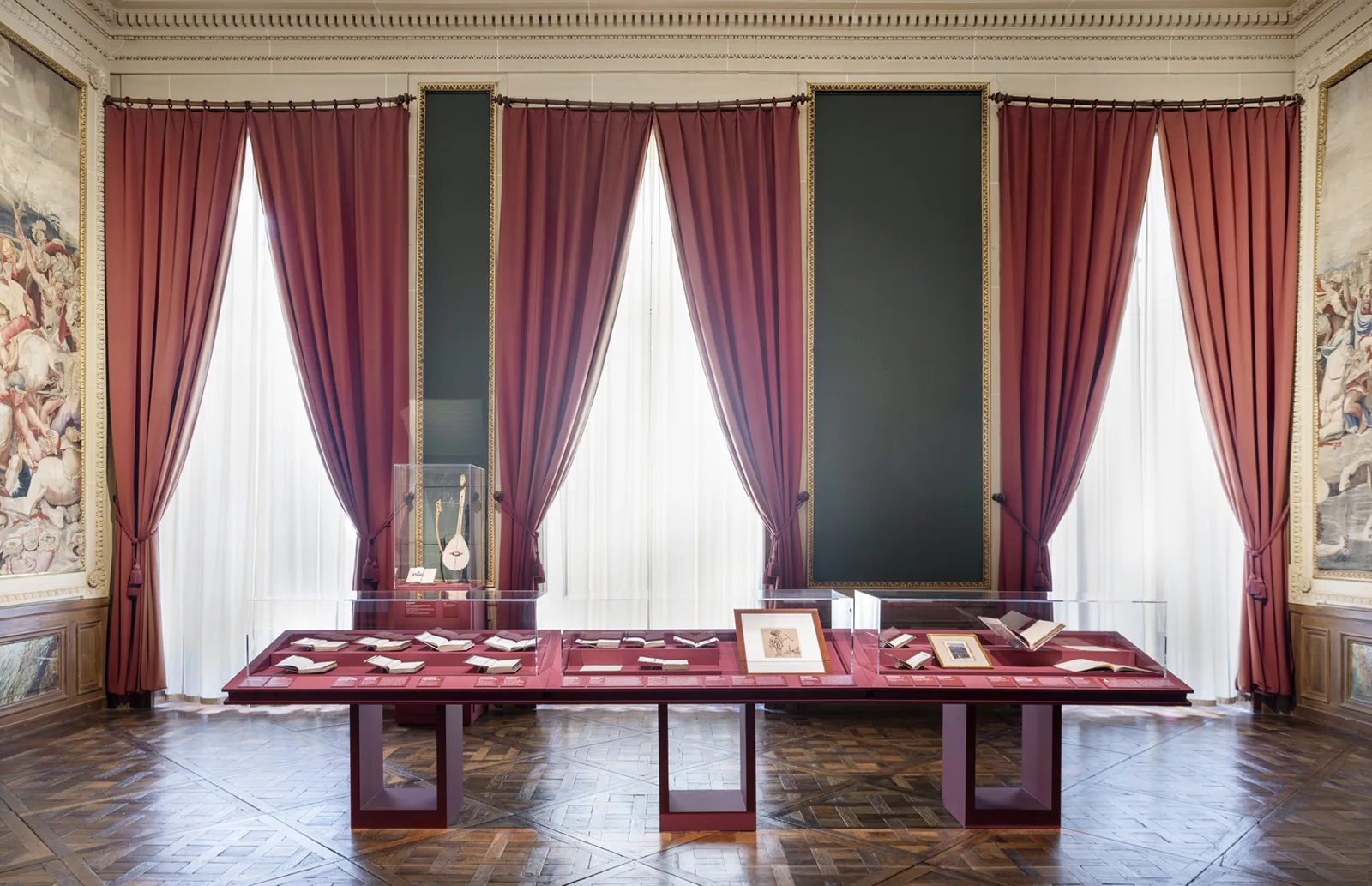
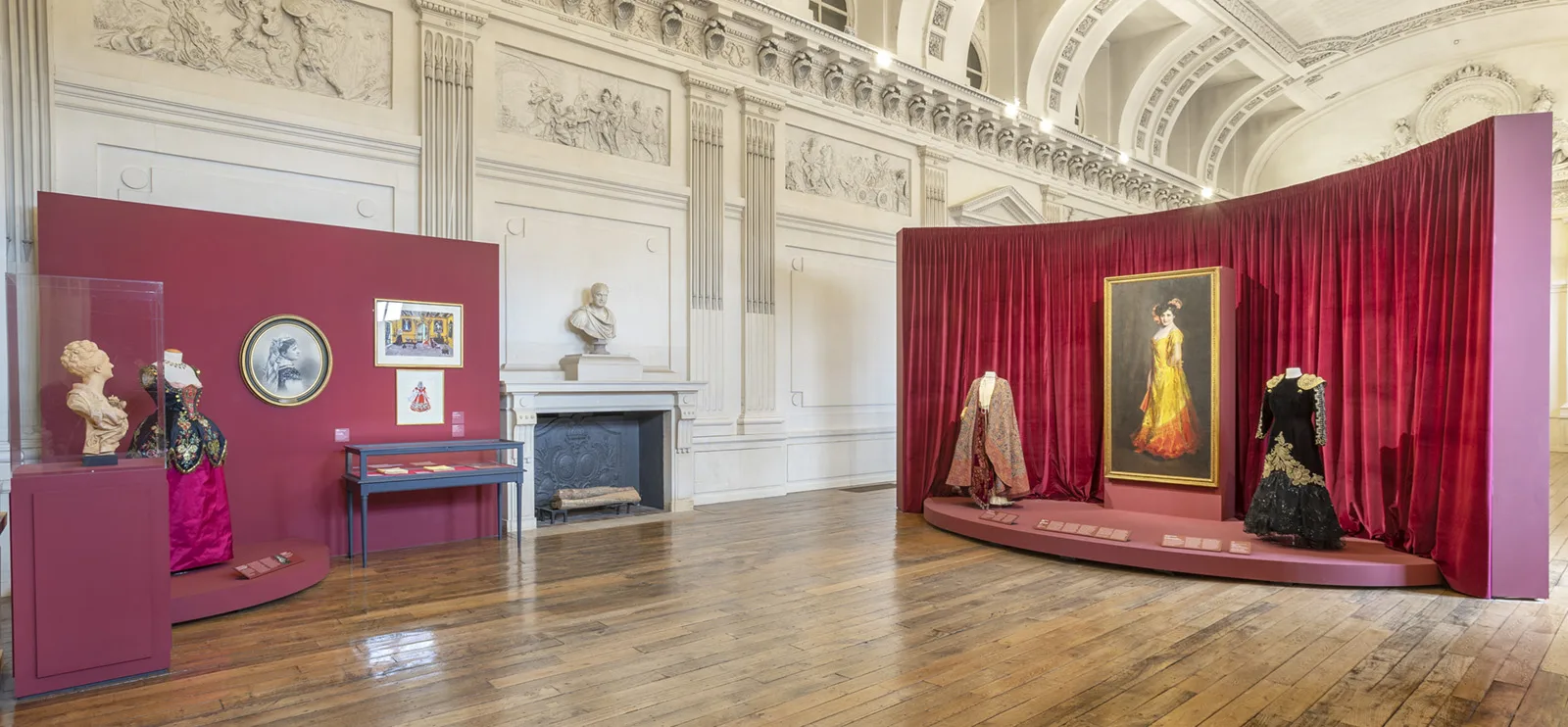
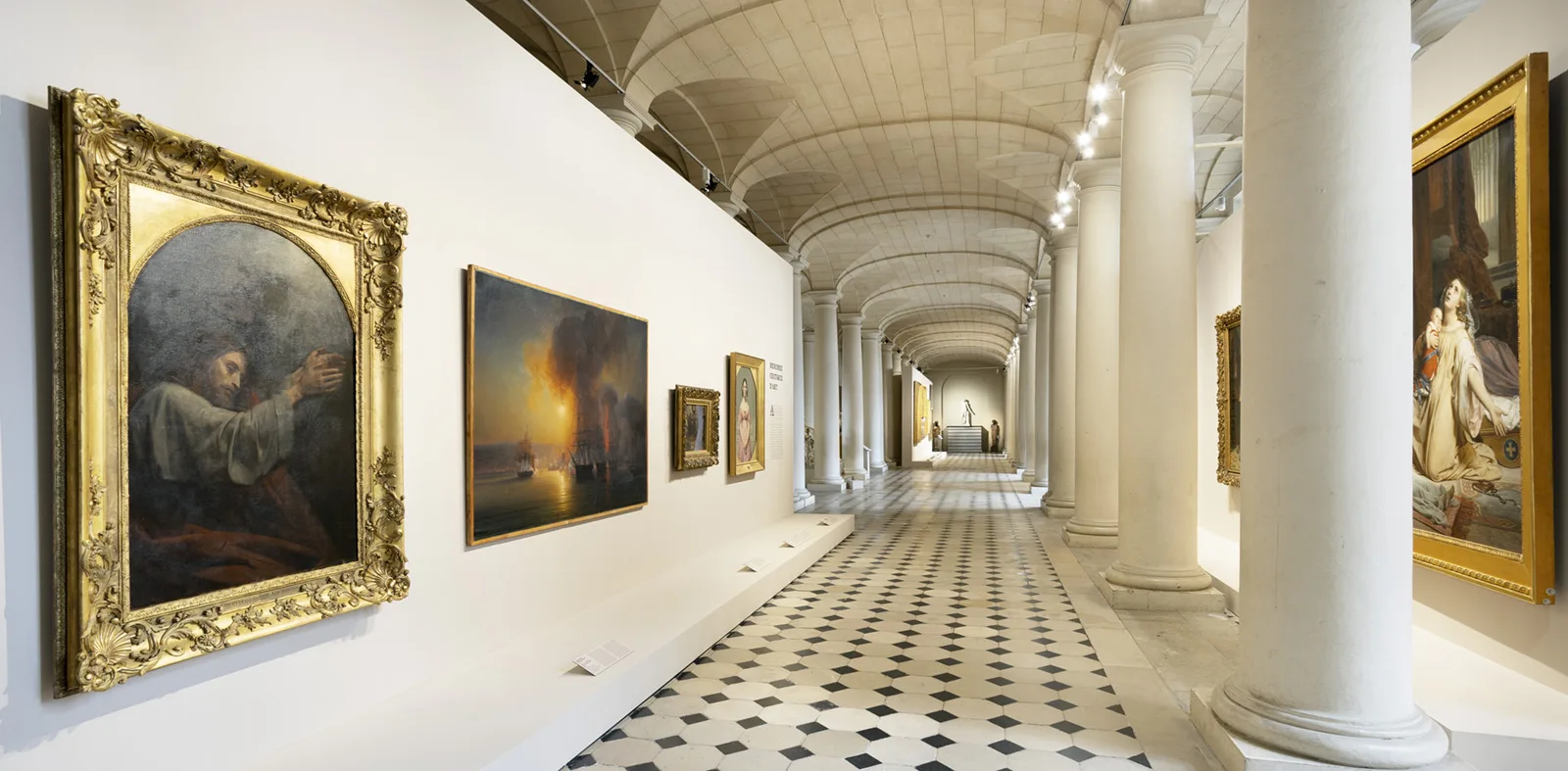
The temporary exhibition “Prosper Mérimée (1803-1870)”, presented at the Château de Compiègne over some 1,345 m2, unfolds on the first floor in the imperial apartments, which were at times the very setting of this story.
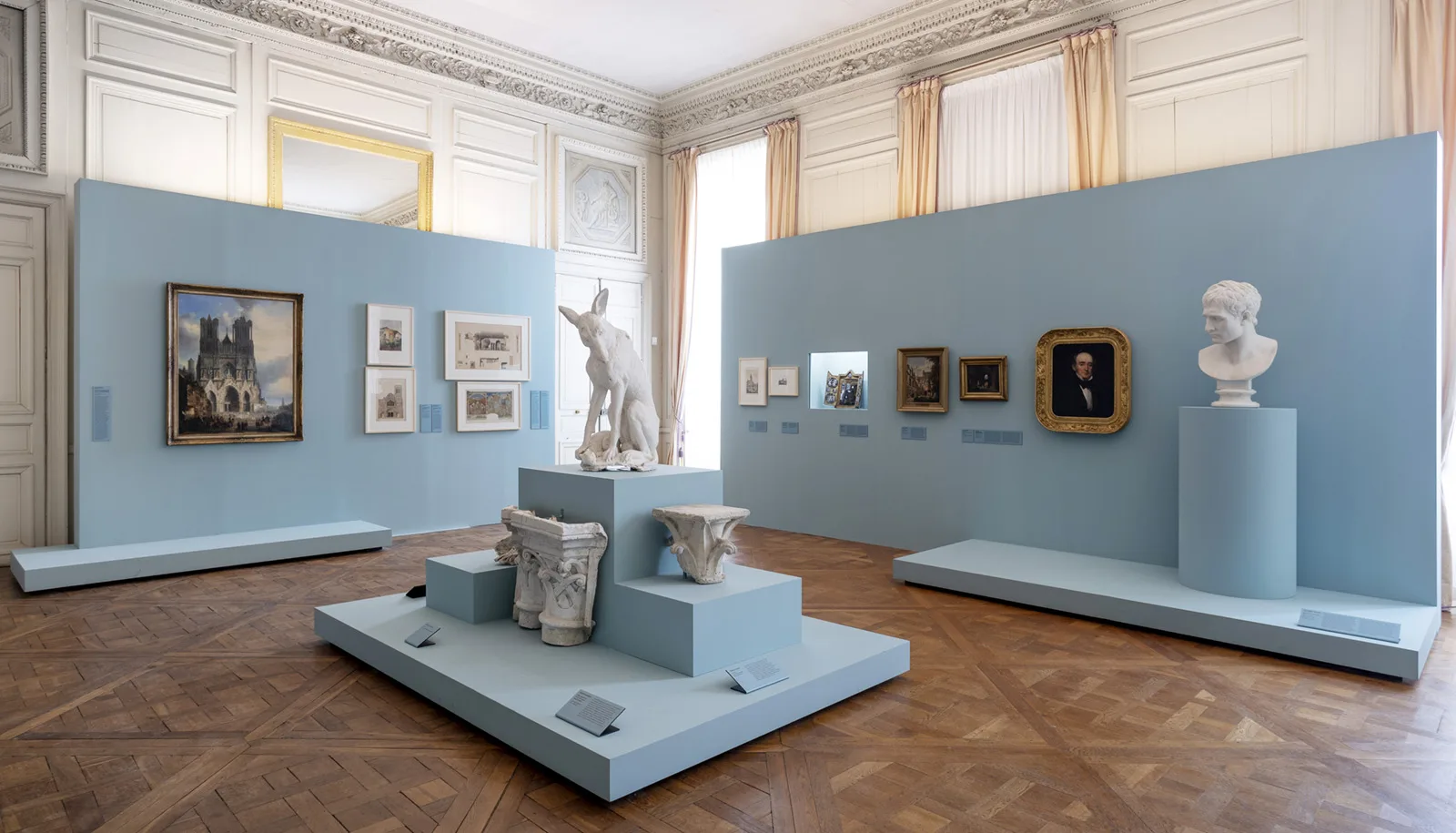
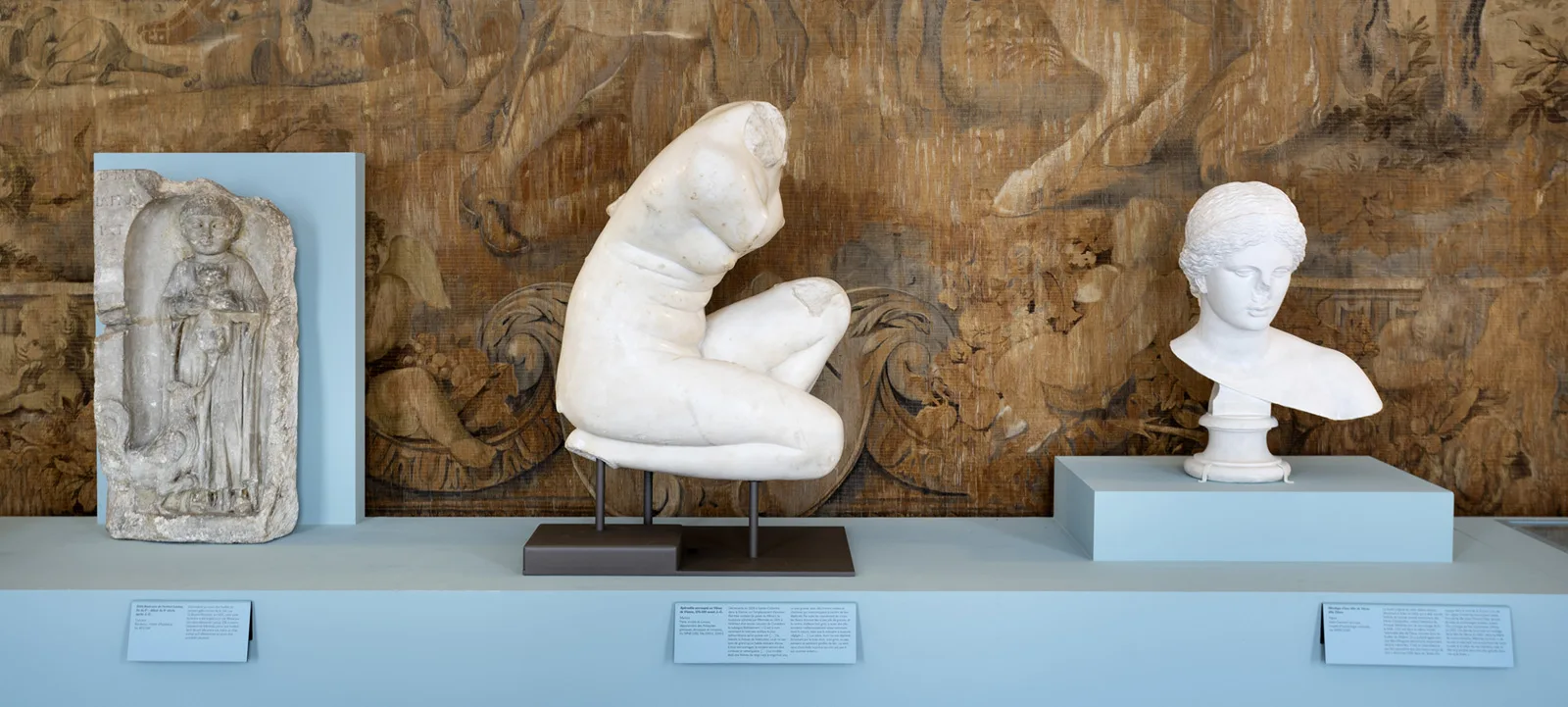
The project thus brings the works face to face with the interiors, drawing out meaningful connections and helping visitors to understand the subject better.
The exhibition design fits as closely as possible into a heritage context rich in decoration and history, and becomes a clear support for understanding the curatorial narrative and its links with the site.
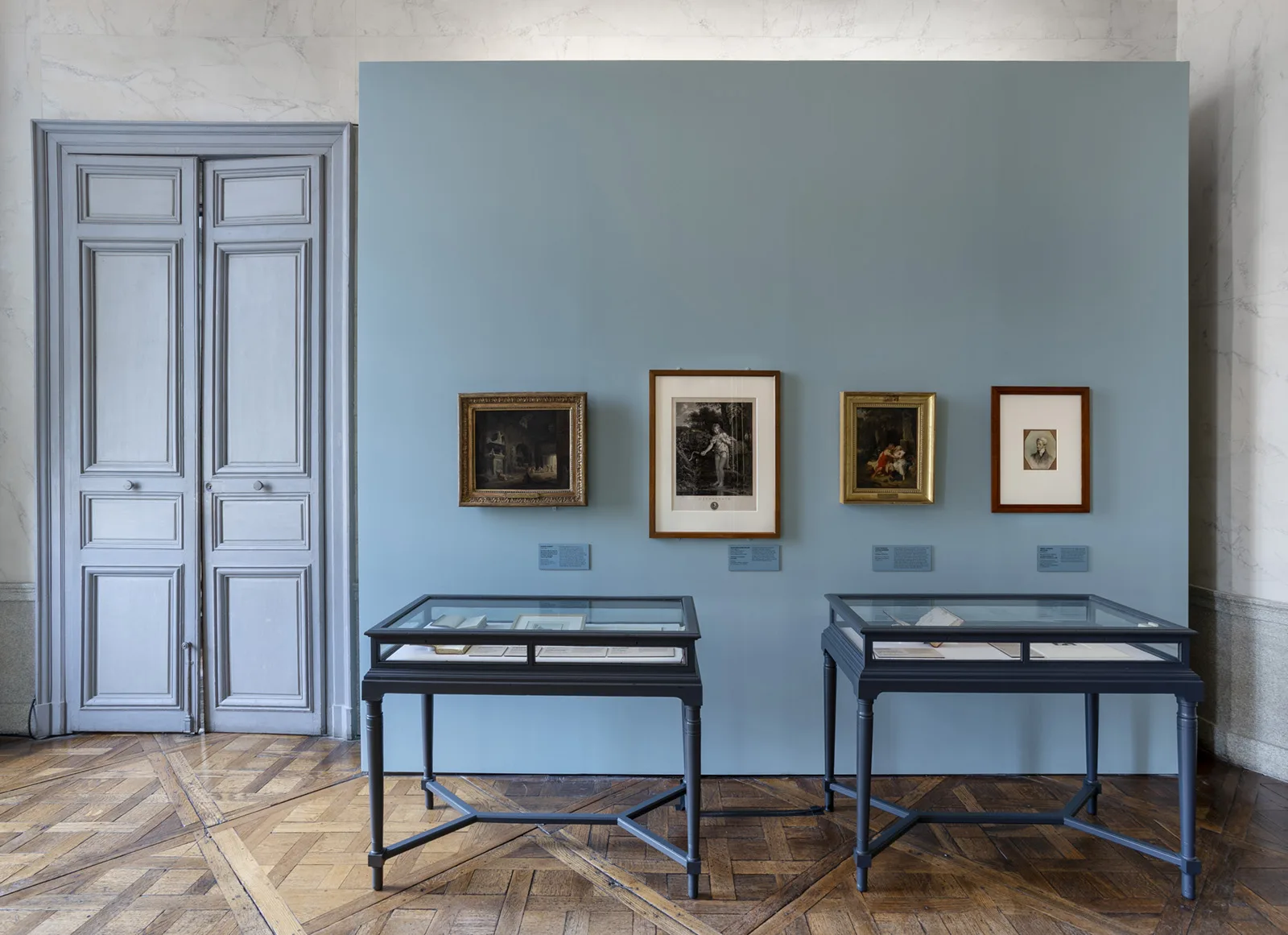
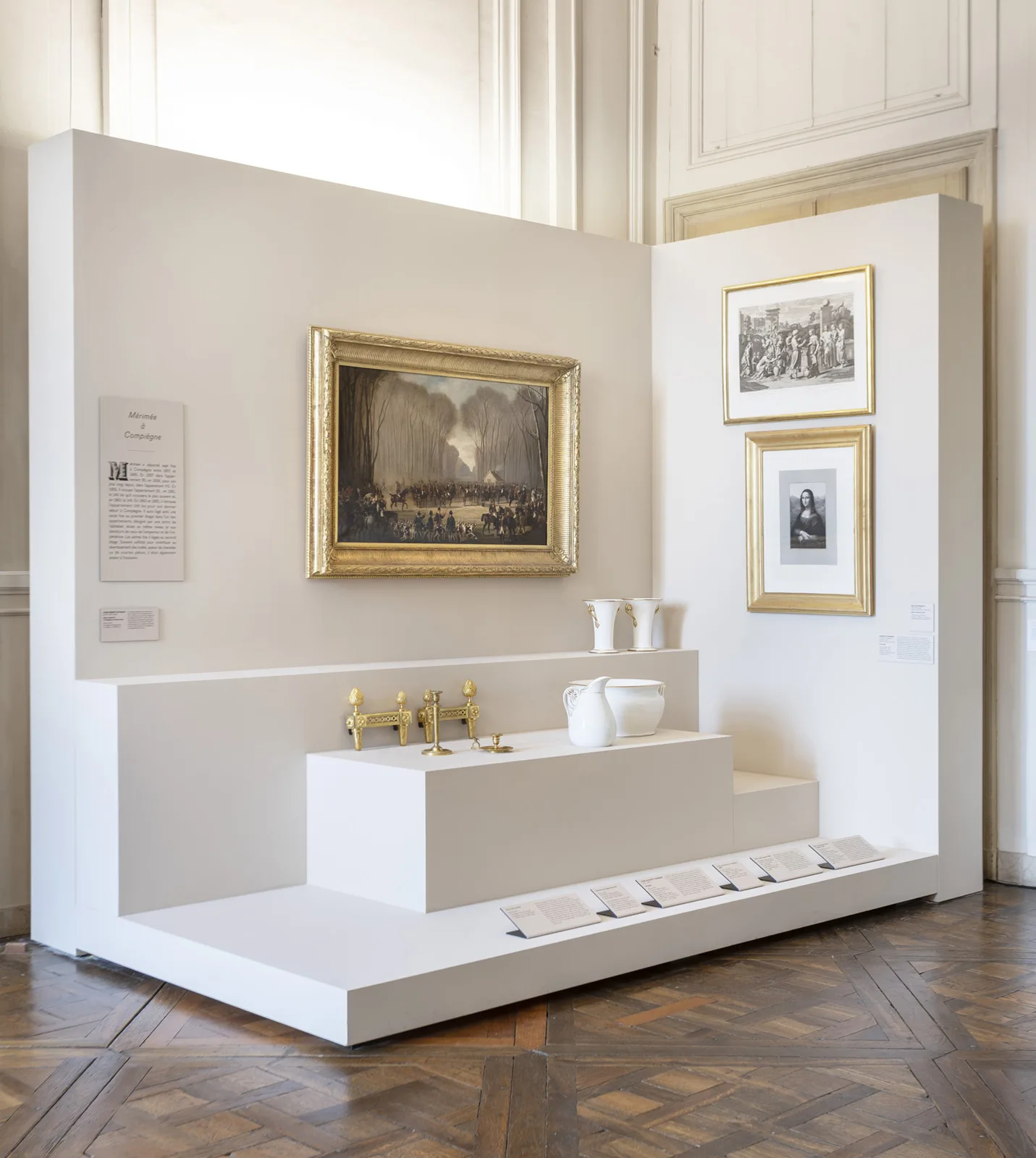
The project uses very simple display structures so that they blend in a contemporary and elegant way with the decoration and with the volumes of the different rooms.
While essential to the display, the picture walls line up with the existing decoration, leaving the large tapestries visible or framing the tall windows overlooking the park.
The proportions of the rooms are always kept in balance, without distorting the volumes or the perception of the historic setting.
The project reuses all the historic display cases and a large part of the contemporary cases and plinths.
For aesthetic consistency, the new display furniture is designed with simple, minimal lines so that it integrates seamlessly with the existing pieces.
Photographs: Enrico Bartolucci